
Contact lenses - types and use
Contact lenses

Contact lenses: types, function and comfort

Contact lenses sit directly on the tear film and correct vision without a frame on the face. They can help with myopia, hyperopia, astigmatism and presbyopia, but require the right type, material and hygiene.

Book a visit

Correction without a frame

The lens moves with the eye, giving a free field of view and working well for sport, travel and sunglasses.

Different designs

Spherical, toric lenses for astigmatism and multifocal lenses for distance and near vision are available.

Material and wearing mode

Lenses may be daily, two-week or monthly. They differ in material, oxygen permeability and care method.

What contact lenses are
Basics

What contact lenses are

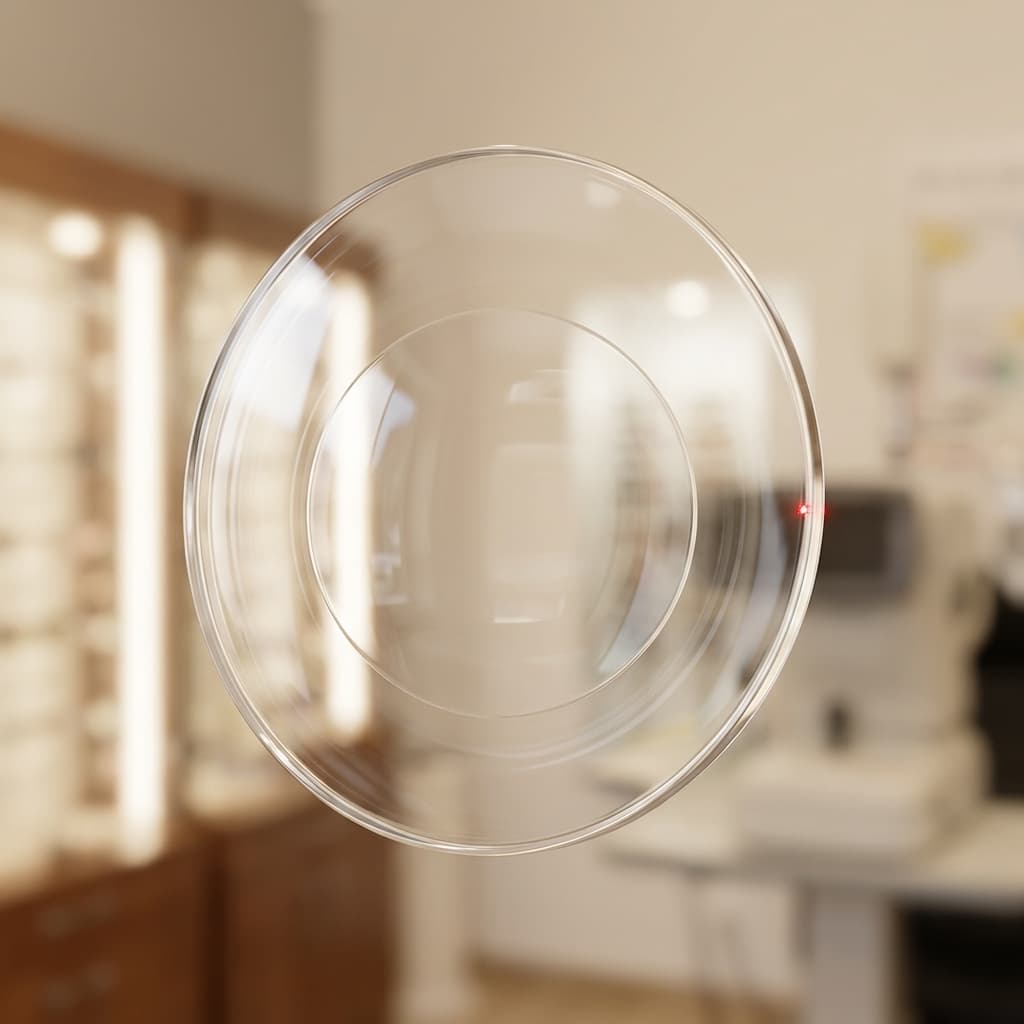
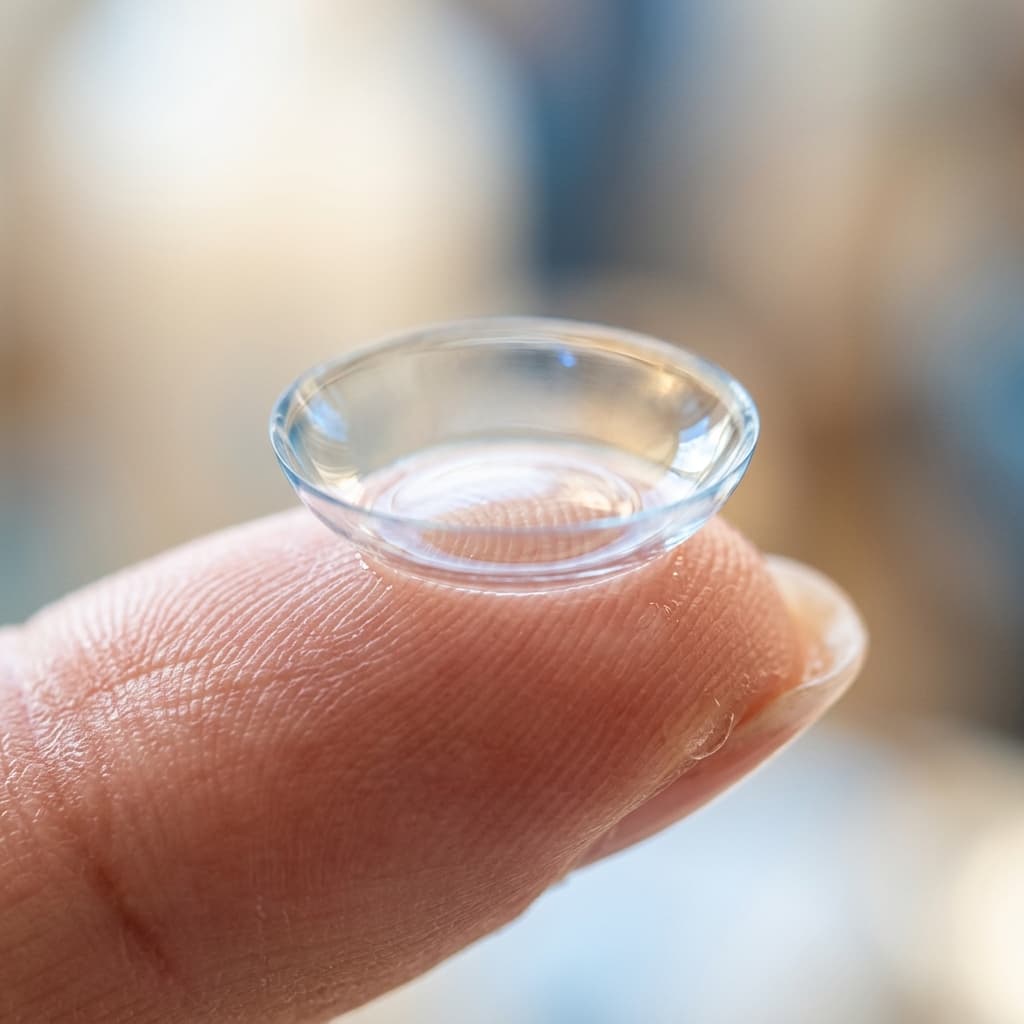
A contact lens is a thin, soft optical lens that sits on the tear film covering the eye. It does not touch the eye like a hard object; it works in the layer of tears, so comfort depends on material, hydration and fit.

Unlike glasses, a contact lens moves with the eye. It gives a wide field of view, does not fog, does not slip down the nose and does not limit movement in sport. It does not replace hygiene rules or fit checks.

they sit on the tear film
they move with the eye
they correct vision without a frame
they require proper hygiene and checks
How contact lenses correct vision
Correction

How contact lenses correct vision

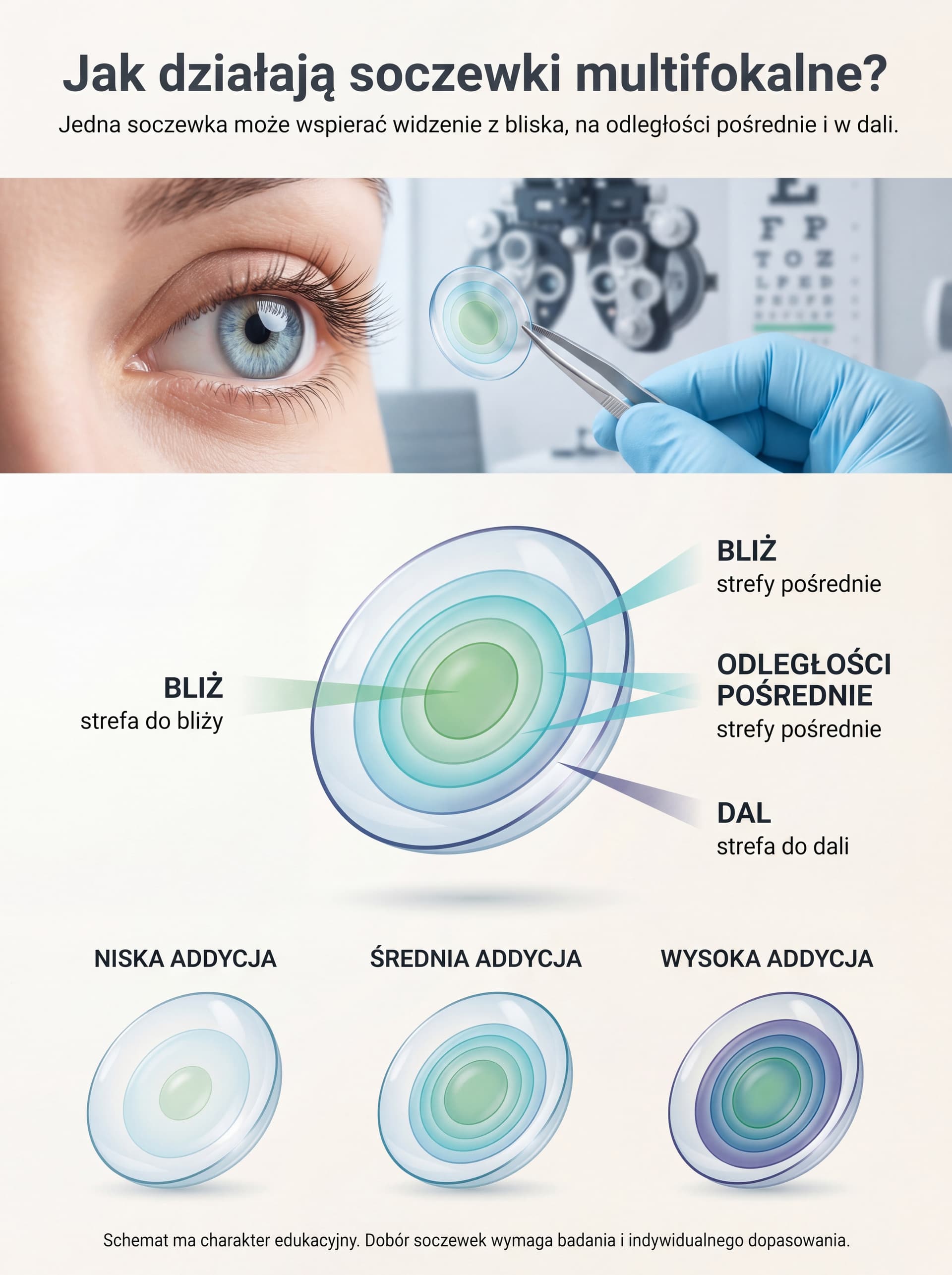
Spherical lenses correct myopia and hyperopia. Toric lenses have an additional stabilising design, so they can correct astigmatism. Multifocal lenses combine zones for distance, near and intermediate vision.

Because the lens sits closer to the eye than a spectacle lens, its power and parameters are not always a direct copy of a glasses prescription. Base curve, diameter, material and fit also matter.

spherical lenses for myopia and hyperopia
toric lenses for astigmatism
multifocal lenses for presbyopia
parameters differ from glasses
Multifocal lenses: near, computer and distance
Distance and near

Multifocal lenses: near, computer and distance

Multifocal lenses are designed for people who want to see near and far without constantly putting on reading glasses. They are most often chosen after 40, when natural accommodation weakens.

One lens contains zones supporting different distances. The brain learns to select the part of the image needed at a given moment. Adaptation is individual, so checking comfort after first wear is important.

near, intermediate and distance vision
different additions for user needs
a possible alternative to reading glasses
they require fitting and adaptation
Book lens fitting
Daily, two-week and monthly lenses
Wearing mode

Daily, two-week and monthly lenses

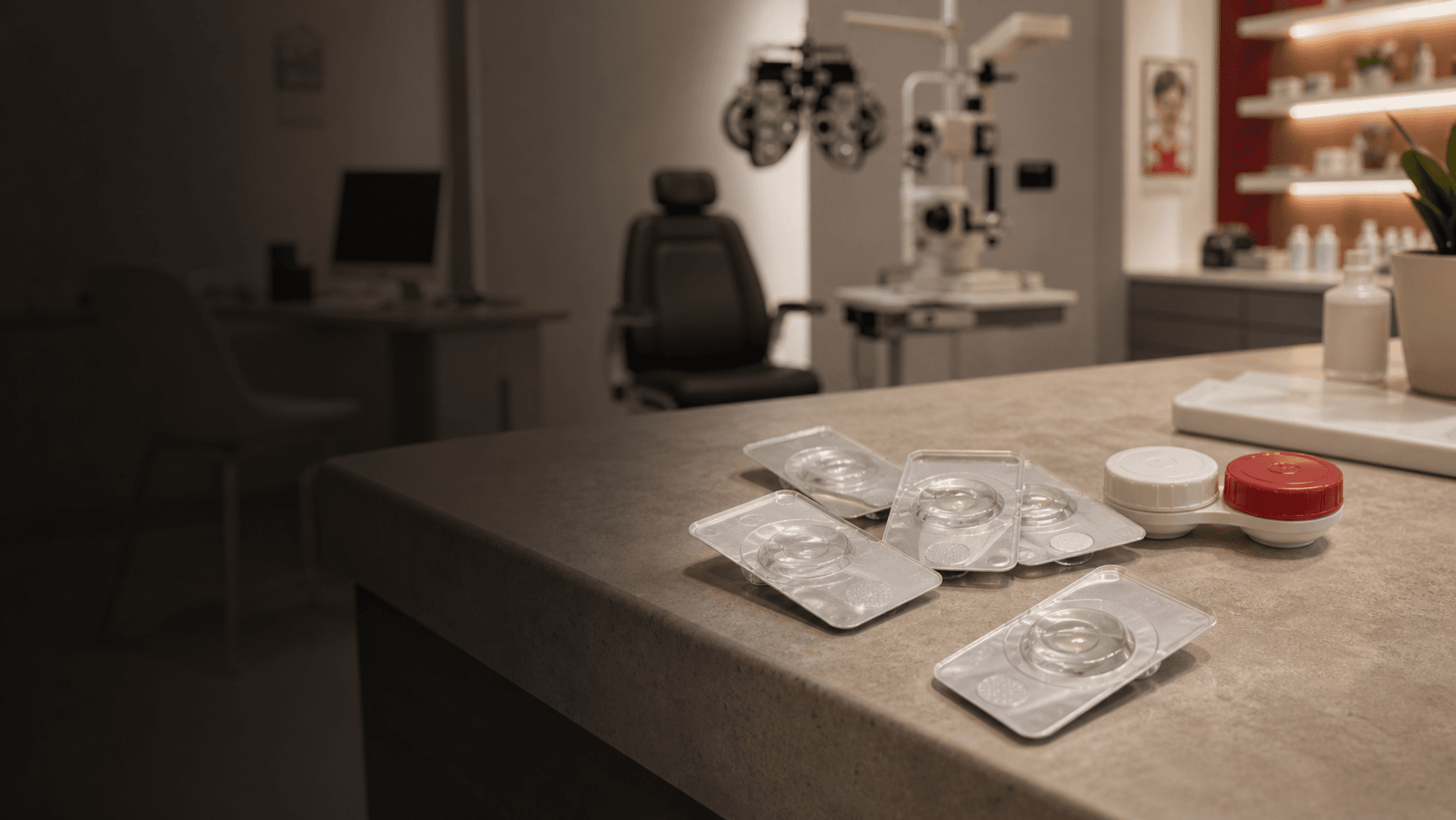
Daily lenses are put on in the morning and discarded after removal. They are convenient for sport, travel and occasional use because they do not require solution or a case. Two-week and monthly lenses need daily cleaning and storage in solution.

The choice depends on how often you want to wear lenses, how your eyes react, how much time you spend at screens and whether you want the simplest hygiene. Material affects oxygen, hydration and comfort at the end of the day.

daily lenses need no care after removal
two-week and monthly lenses use solution
material affects oxygen and hydration
wearing mode is chosen for everyday habits

Take care of your eyesight today

Pick the salon that suits you - Łokietka 14 or Żelazna 48 - and book a visit. You'll see the difference.