
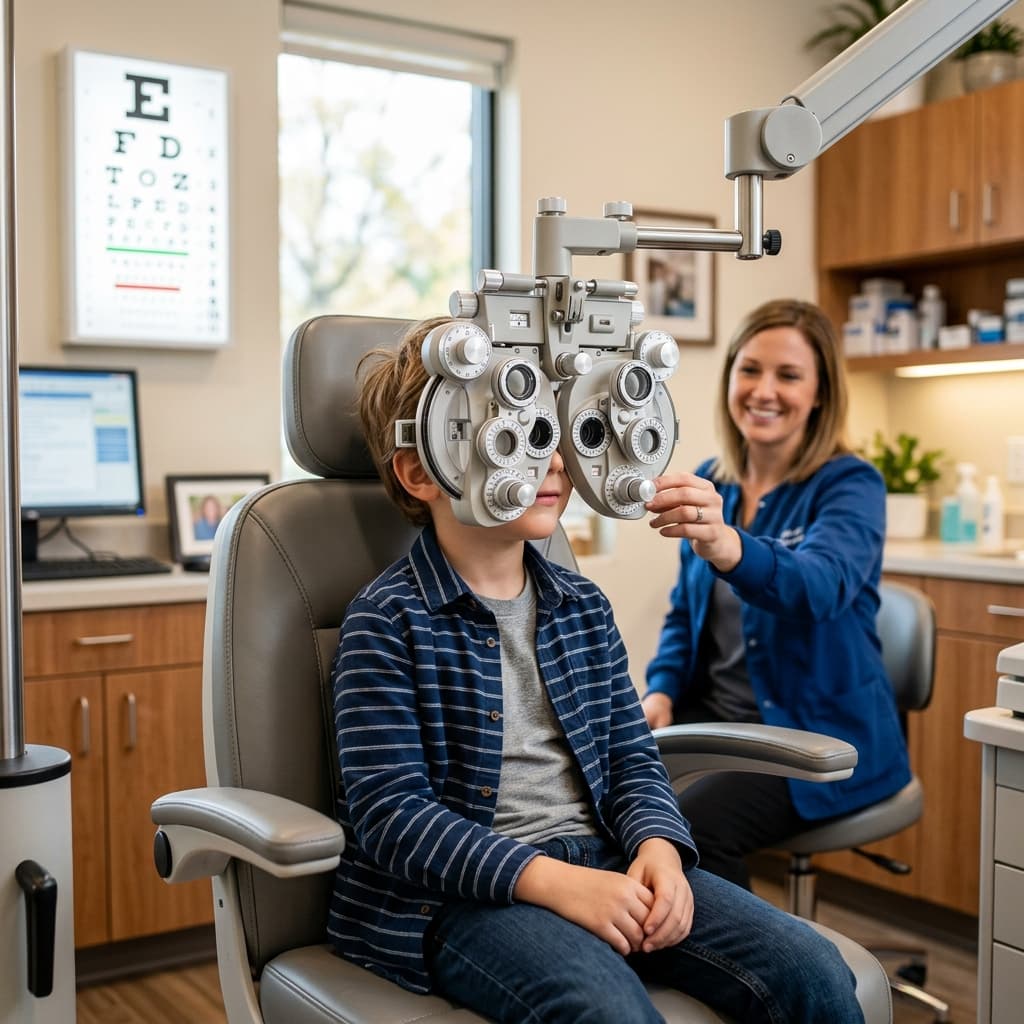
Child at an optometrist before a phoropter
Children

Glasses and lenses for children

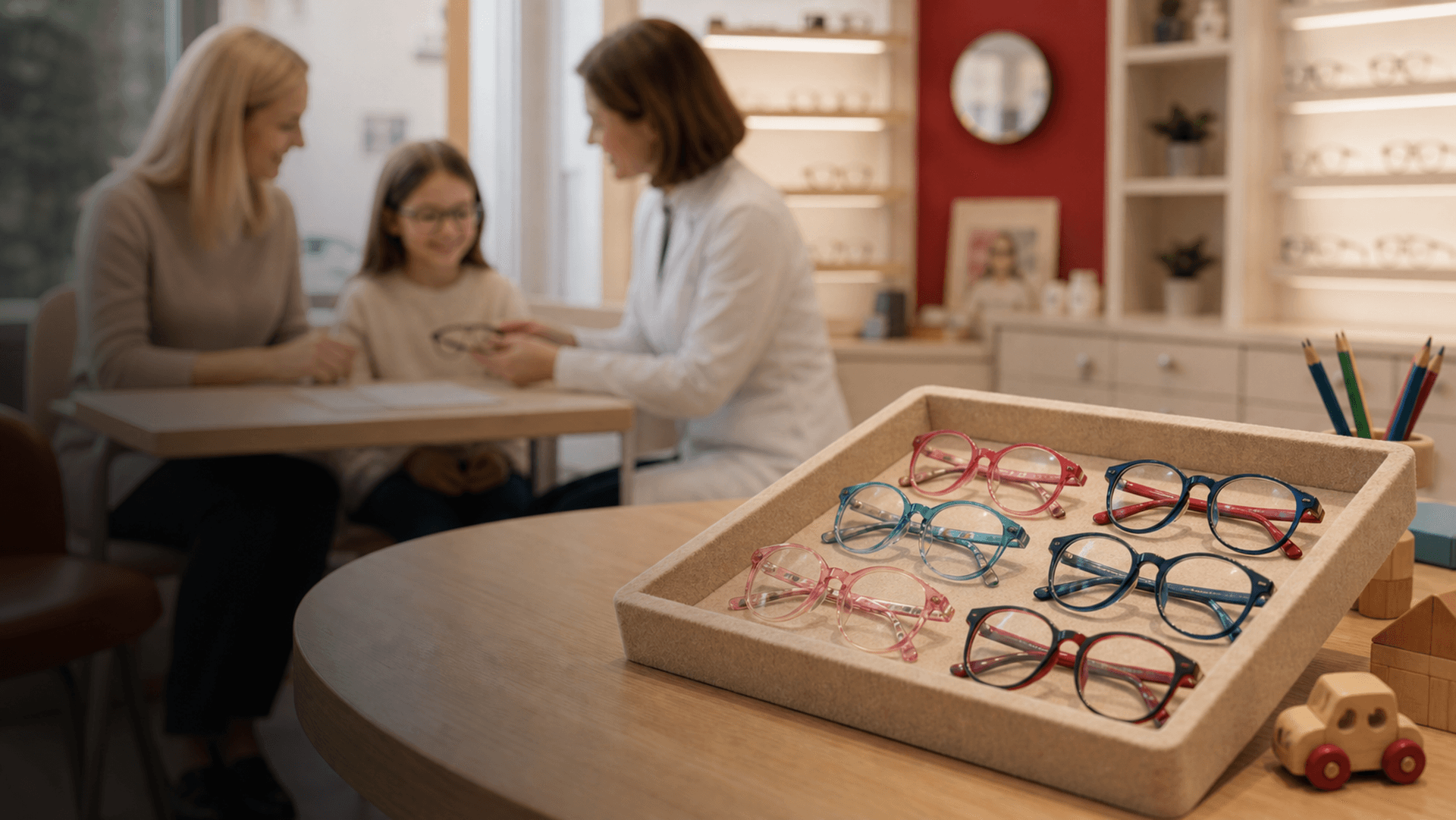
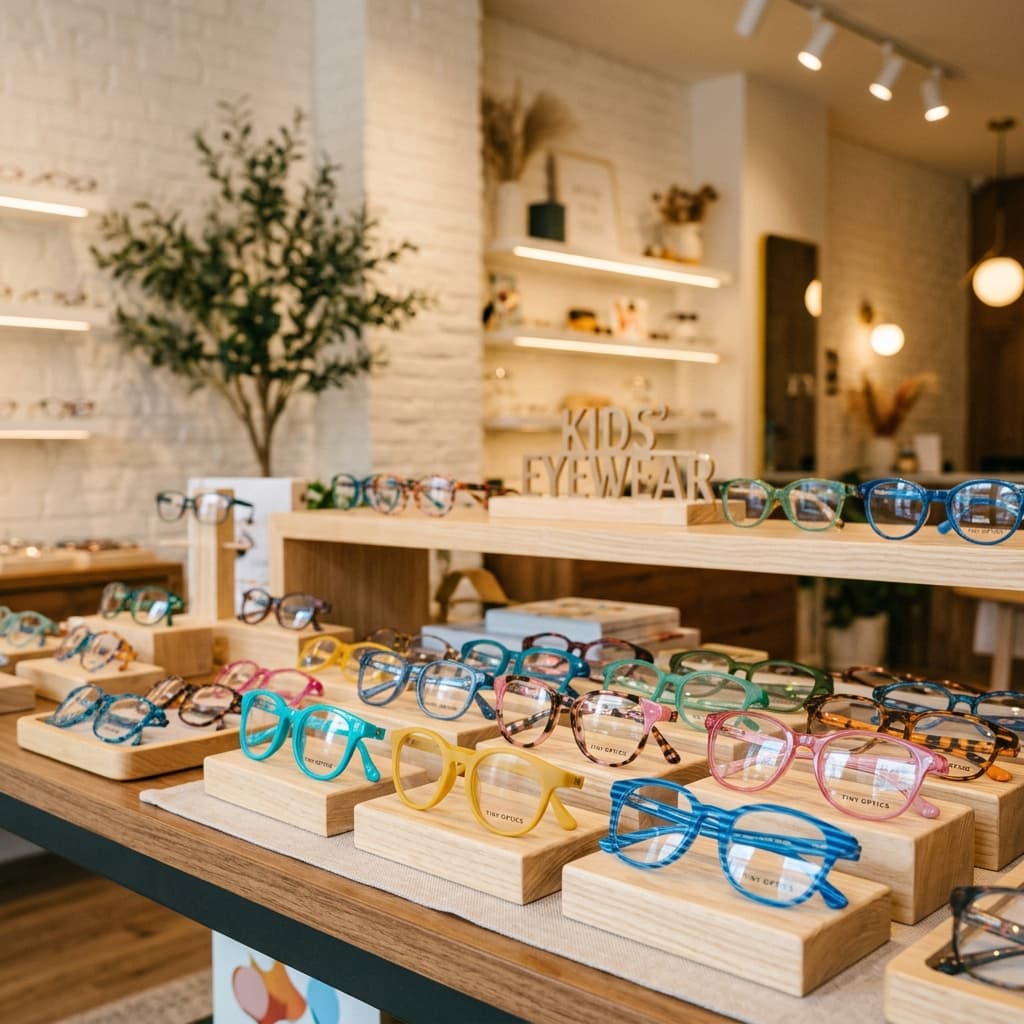
A child will wear glasses only if they are comfortable. We choose light frames and lenses so the child sees well and the glasses do not get in the way at play, school or sport.

Book a visit

Safe materials

We choose light plastic, photochromic or Trivex lenses when more resistance is needed.

Protective coatings

Anti-reflective and strengthening coatings help in everyday use.

MiYOSMART

In childhood myopia, we discuss lenses supporting myopia progression control.

Fitting frames for active children
Durability and aesthetics

Fitting frames for active children

Children's glasses need to survive running, jumping, PE lessons and being put into a backpack without a case. That is why we focus on flexible, safe materials and spring hinges.

Besides durability, correct nose fit is crucial. Children usually have lower, flatter nose bridges. An experienced optician can adjust the frame so the child looks through the optical centre of the lens, not above it.
Managing childhood myopia
Myopia control

Managing childhood myopia

If your child's prescription increases quickly every year, standard spectacle lenses may not be enough. In such cases we discuss MiYOSMART lenses.

They were designed specifically for children and contain a structure of hundreds of micro-lenses. Clinical studies show they can slow myopia progression, supporting healthier eyes in adulthood.

Slowing prescription progression with DIMS technology
Impact-resistant material such as polycarbonate or Trivex
Full UV protection
Questions and answers

Frequently asked questions

From what age do you examine children's eyes?

From about 4-5 years old, when a child can cooperate during a letter chart test. The exam is painless and adapted to the child's age. If an exam with eye drops is needed, we refer to an ophthalmologist.

Which glasses should I choose for my child?

Light frames made of flexible, safe materials, such as memory-shape materials, with spring hinges. The frame must fit a lower, flatter nose bridge so the child looks through the centre of the lens. We choose plastic, photochromic or Trivex lenses with scratch-resistant coatings.

What are MiYOSMART lenses?

Spectacle lenses for short-sighted children with hundreds of micro-lenses arranged like a honeycomb (DIMS technology). Clinical studies show they slow myopia progression by 60% on average.

Which signs can point to a vision problem in a child?

Squinting, leaning over the notebook, reluctance to read, rubbing the eyes and getting tired quickly. If you notice them, book an eye exam.

How often should a child's eyes be checked?

More often than adults, for whom we recommend a check every 1-2 years. Vision can change quickly while children grow, especially with progressing myopia.

Take care of your eyesight today

Pick the salon that suits you - Łokietka 14 or Żelazna 48 - and book a visit. You'll see the difference.